

Tradwives trending: what this growing movement symbolises for feminism in 2025
In today's increasingly right wing political landscape, women's rights are in a far more precarious position that many would appreciate or have anticipated. One of the most prominent nations in which we can see this change occurring, and one where it is most well documented, is the USA. The 2022 reversal of Roe v Wade – which guaranteed the protection of women’s abortion rights – has led to conservative state governments enacting laws that limit or completely ban abortion access for women, and was, for many, a wake up call as to the danger that American women’s rights were in.
Yet, this right wing zeitgeist is not just confined to politics. Culturally, we have also seen a rise in the concept of the ‘tradwife[1]’. In its simplest form, a tradwife is a “woman who doesn’t work"[2] and instead focuses on raising her children, tending to her home, and keeping her marriage happy. The tradwife subculture encompasses a range of ‘types’ of woman, and it is therefore important to define the nuanced groups within the wider movement. In the UK, tradwives have more ‘harmless’, 1940s-esque connotations, but increasingly the US branch of the movement holds far closer associations with alt-right, red pill groups[3] (groups that believe we live in a matriarchy that oppresses men[4]) – and is thus becoming increasingly problematic in the eyes of feminist critics.
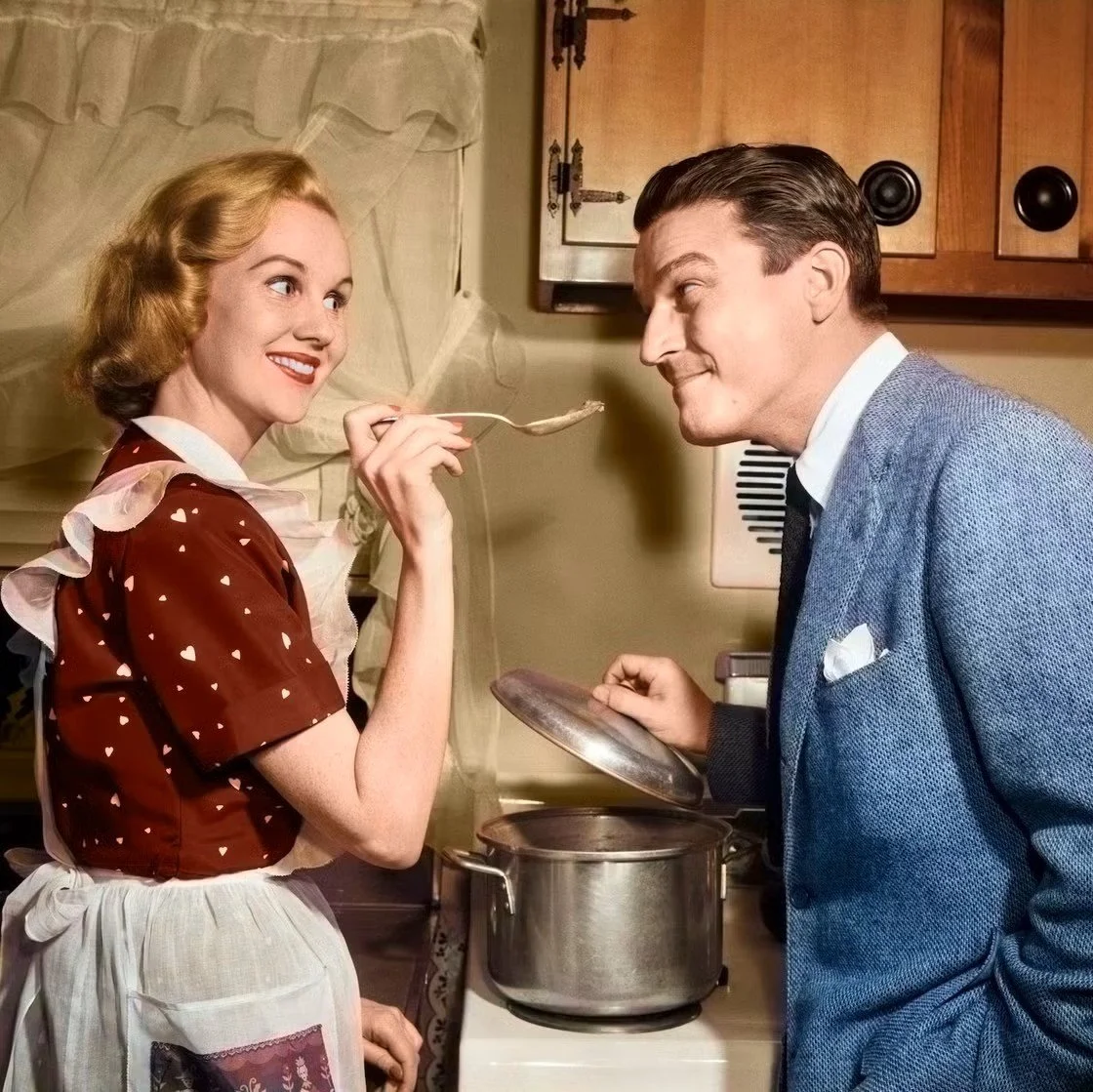
Tradwife depiction
I would like to preface this by stating that feminism prioritises allowing women choice, and this article is not a criticism of those women who choose to become a housewife. However, the links between the tradwife movement and often far right misogynistic ideology have undoubtedly contributed to recent debates about the woman’s role in modern America and whether it is to stay at home regardless of whether she wants to or not.
A common criticism of the tradwife movement is that the nostalgic lifestyle they typically represent online can be oversimplified and thereby misleading. Feminist scholars Hadley Freeman[5] and Zara Hanawalt[6] note that as many tradwives present their allegedly pristine lifestyles on social media (Nara Smith being a prime example), the perception they project of their role becomes ‘reality’. By encouraging women to stay at home and rely on their husband’s income, the tradwife movement implies that they want the return of the single income household, a lifestyle that was only previously possible because of large scale government intervention and financial support. Ironically, this is the type of ‘big’ federal government the Republicans campaign against, evidencing the misleading paradox of the tradwife ideology. Another aspect of their ‘simplistic’ lifestyle that is rooted in misogyny is the notion that the way to achieve this perfect life is by prioritising their husband’s happiness and needs above your own. This conviction, and the dissemination of this on social media, is grounded in sexist theory, and whether intended that way or not, acts to suggest that the woman’s role is whatever her husband needs it to be, rather than to be her own agency.
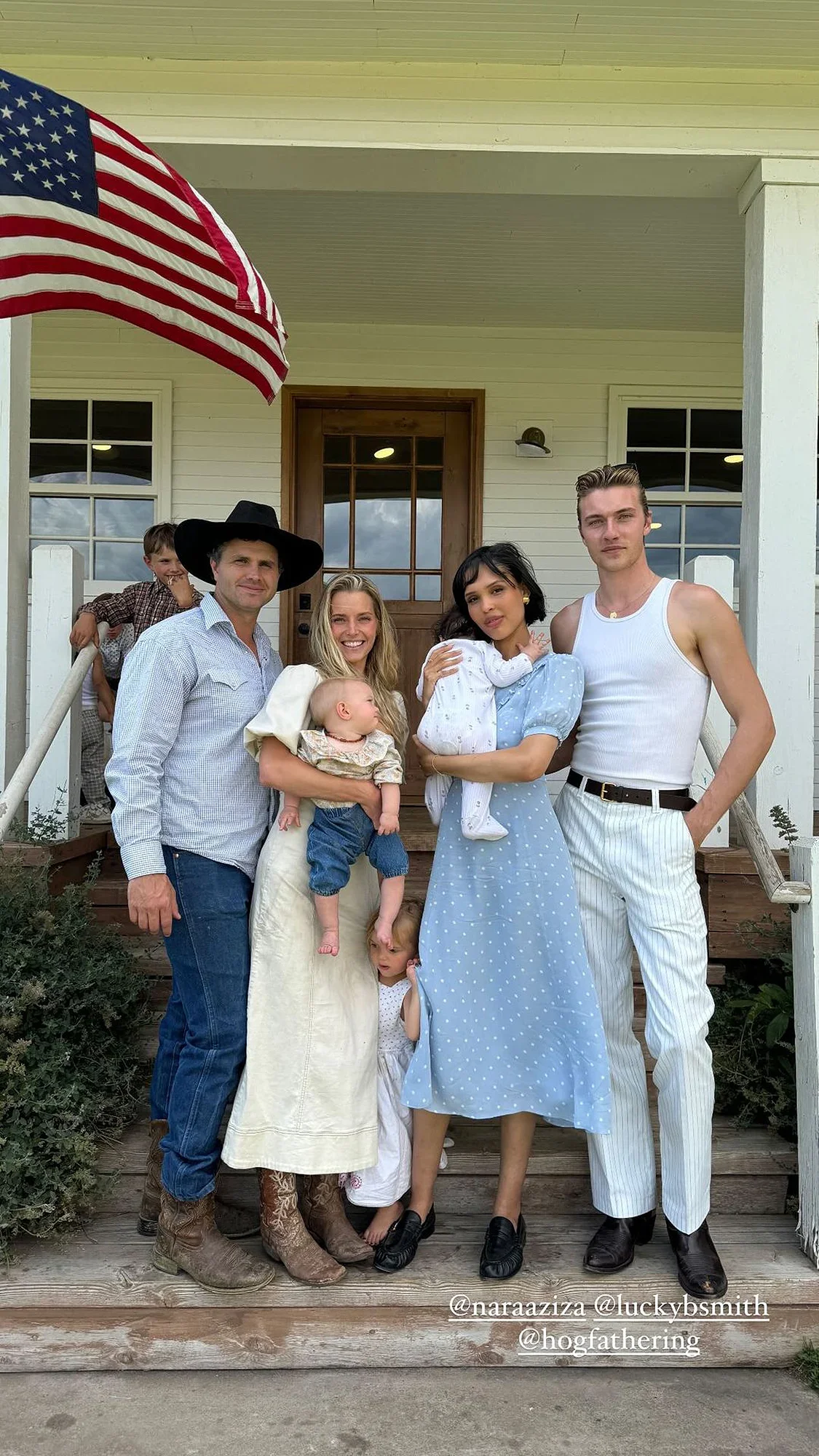
Nara Smith and family
Not only are the misogynistic undertones of the tradwife movement problematic in their own right, but in light of the current political climate in America, the covert promotion of the tradwife lifestyle only serves as fuel to the fire surrounding women’s rights. For example, when looking closer at VP Vance’s politics, his love of the nuclear family and dislike of the ‘sexual revolution’ and divorce, a close correlation with the beliefs of a tradwife can be seen[7]. Furthermore, during the 2024 election campaign, Vance implied that Democrat nominee Harris’s political power should be limited because she does not have biological children, suggesting that he believed women who did not have children to be lesser people[8]. When looking at this in combination with the pre-existing far right wing ideologies of believing that a woman’s value lays in her ability to serve and the belief that tradwives should be “the norm rather than the exception”[9], is arguably a worrying picture of the misogynistic tendencies that the current American Government idealises.

The growing visibility of the tradwife lifestyle, in alignment with MAGA, (especially in a political climate where women’s rights are already up for debate) is without doubt a disturbing trend. Surely, by continuing on the same path, we only risk further embolden the government into making choices that endanger the feminist movement? Though tradwives are entitled to their nostalgic, male-centric lifestyle, the resounding silence from prominent figures within the movement on its increasingly close links to far right politics begs the question: are they not speaking out because they agree that the American woman should be confined to her husband and home. And if so, how much damage could this do to the 21st century feminist movement?
Written by Emma Cowan