

The 62 Million
Most women in have a routine when going home at night.
Airpods out. Phone in hand ready to call someone. Keys held tightly between fingers. Checking over their shoulder before turning onto a quiet street. Sharing their location with a friend. Pretending to be on a phone call while walking alone. Spending money on a taxi they cannot really afford because it feels safer than the bus. Sending the same ‘home safe’ text before finally being able to relax.
These behaviours are so normalised that they are rarely questioned. They are framed as sensible precautions, simply part of being a woman. Yet following revelations surrounding an online ‘rape forum’ and claims that the website received 62 million visits, many women were forced to confront an uncomfortable thought.
Perhaps this routine exists for a reason far bigger than society likes to admit.
The figure dominated headlines and social media discussions. While debate quickly emerged around what it actually represented (website visits rather than necessarily 62 million individual men) yet this distinction barely matters. The number itself is horrifying enough.
What unsettled people was not simply that violent online spaces exist. Most women already know misogyny exists online. It was the sheer scale of engagement that struck such a nerve. The “62 million” figure confirms that violence and hatred towards women are not confined to isolated extremists, but exist on a much larger scale beneath everyday life.
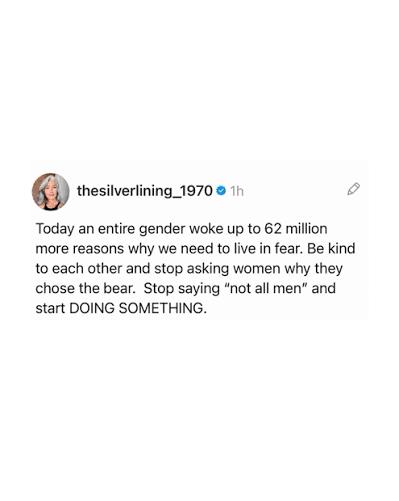
Viral tweet shared on telegram news
In response, some commentators began using the phrase ‘gender apartheid’ to describe women’s experiences in Scotland. The term is deliberately provocative, but its growing use reflects increasing frustration around the fact that women and men often move through society very differently.
Traditionally, apartheid refers to a system where one group is systematically segregated, controlled or denied freedoms by another. The term is most strongly associated with apartheid South Africa, where racial segregation was enforced through law and violence. Gender apartheid applies this concept to sex and gender, describing societies where women’s freedoms are limited simply because of gender.
Scotland is clearly not a country where women are legally banned from public life. Women can vote, work, study and participate politically. Yet supporters of the term argue that legal equality does not always translate into lived equality. If women cannot move through public spaces with the same sense of safety and freedom as men, then equality becomes conditional rather than absolute.
The routine women follow every day reflects this reality. Women calculate risk constantly, often without even noticing they are doing it anymore. Routes home are planned around lighting and busy roads. Drinks are covered in clubs and bars. Friends walk each other home in groups. Women avoid empty train carriages, parks after dark and isolated streets. Many change outfits before going out to avoid unwanted attention.
Men are rarely socialised to think this way. A man leaving a club late at night is unlikely to consider whether his route home makes him vulnerable or whether rejecting a stranger could place him in danger. For many women, these calculations are automatic.
The hidden costs attached to this are rarely discussed. Safety costs money. Women often spend extra on taxis rather than walking, choose accommodation based on security rather than affordability and avoid late-night jobs or social opportunities because they do not feel safe travelling home afterwards. Female students are routinely advised to budget for safe transport after nights out, while women working evening shifts may face transport costs their male colleagues never need to consider.
These invisible financial burdens reinforce why some women feel the phrase ‘gender apartheid’ resonates. Restrictions do not always have to be written into law to shape how freely people live.
The wider Scottish context only deepens these concerns. Sexual crimes remain high and conviction rates for rape cases continue to be painfully low. Many assaults go unreported entirely because women fear not being believed or see little confidence in the justice system. Against this backdrop, the idea that a website linked to discussions of sexual violence could attract 62 million visits felt less like an isolated scandal and more like confirmation of something deeply embedded within society.
Perhaps the most disturbing part of the figure was what it symbolised. Even if many visits came from repeat users, journalists or people investigating the site, the number still represented enormous engagement with violent misogynistic content. It shatters the assumption that these attitudes exist only on the fringes of society, instead suggesting misogyny can exist openly, casually and at scale.
Critics argue that ‘gender apartheid’ is too extreme a phrase and risks diminishing the historical reality of racial apartheid. That concern is understandable. Scotland is not governed through formal segregation and women today possess rights previous generations fought hard to achieve. Yet the popularity of the phrase reflects genuine anger that women are still expected to adapt themselves around male violence rather than society confronting the roots of that violence itself.
Women are repeatedly taught how to avoid being attacked before men are taught not to attack. Schools, universities and police campaigns often focus on women staying safe.While practical, this advice reinforces the idea that danger is inevitable and that avoiding violence is largely women’s responsibility.
Ultimately, the debate surrounding the ‘62 million’ figure is about far more than one website. It is about what that number appeared to expose - the scale of misogyny many women already suspected existed beneath the surface of ordinary life. Whether or not Scotland truly constitutes a ‘gender apartheid’, the fact that so many women immediately recognised themselves in that fear says more than the figure ever could.
Annabelle Langley